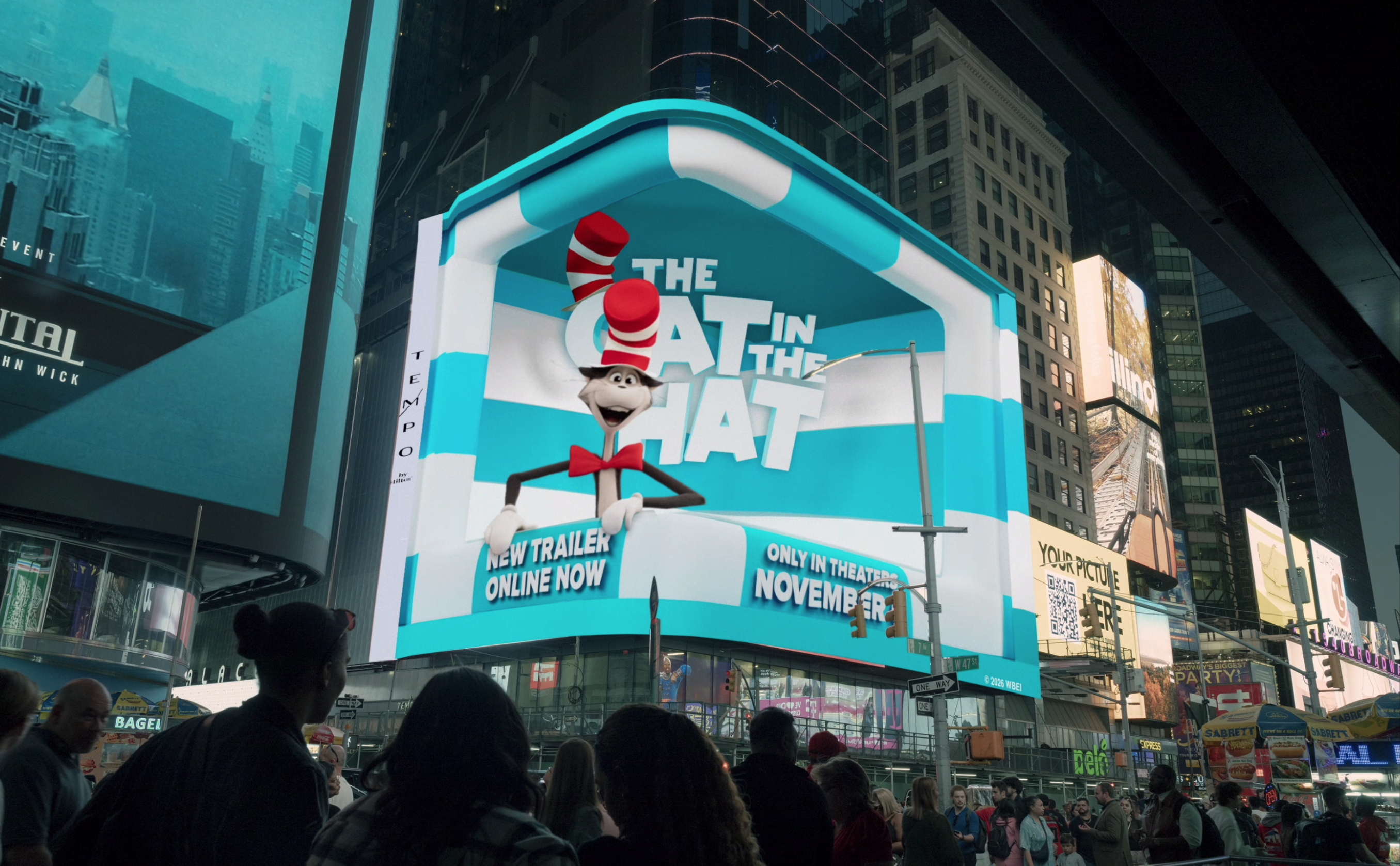
CAT IN THE HAT TIMES SQUARE BILLBOARD
A 3D anamorphic billboard built for the curved TSX screen in Times Square, using forced perspective to give the illusion of depth when viewed from street level.
Overview
The TSX building's curved screen in Times Square gives advertisers a rare opportunity: because the display physically wraps around the corner of the building, content viewed from the correct vantage point on the street can appear to break out of the screen and exist in three-dimensional space. I have wanted to work on one of these anamorphic builds for a long time, so when the chance came up to build one for Cat in the Hat, I dove in to figure out exactly how the format works from the ground up.
The result uses animated toolkit provided by Warner Bros. Animation to create a fully dimensional scene living on the corner of the building.
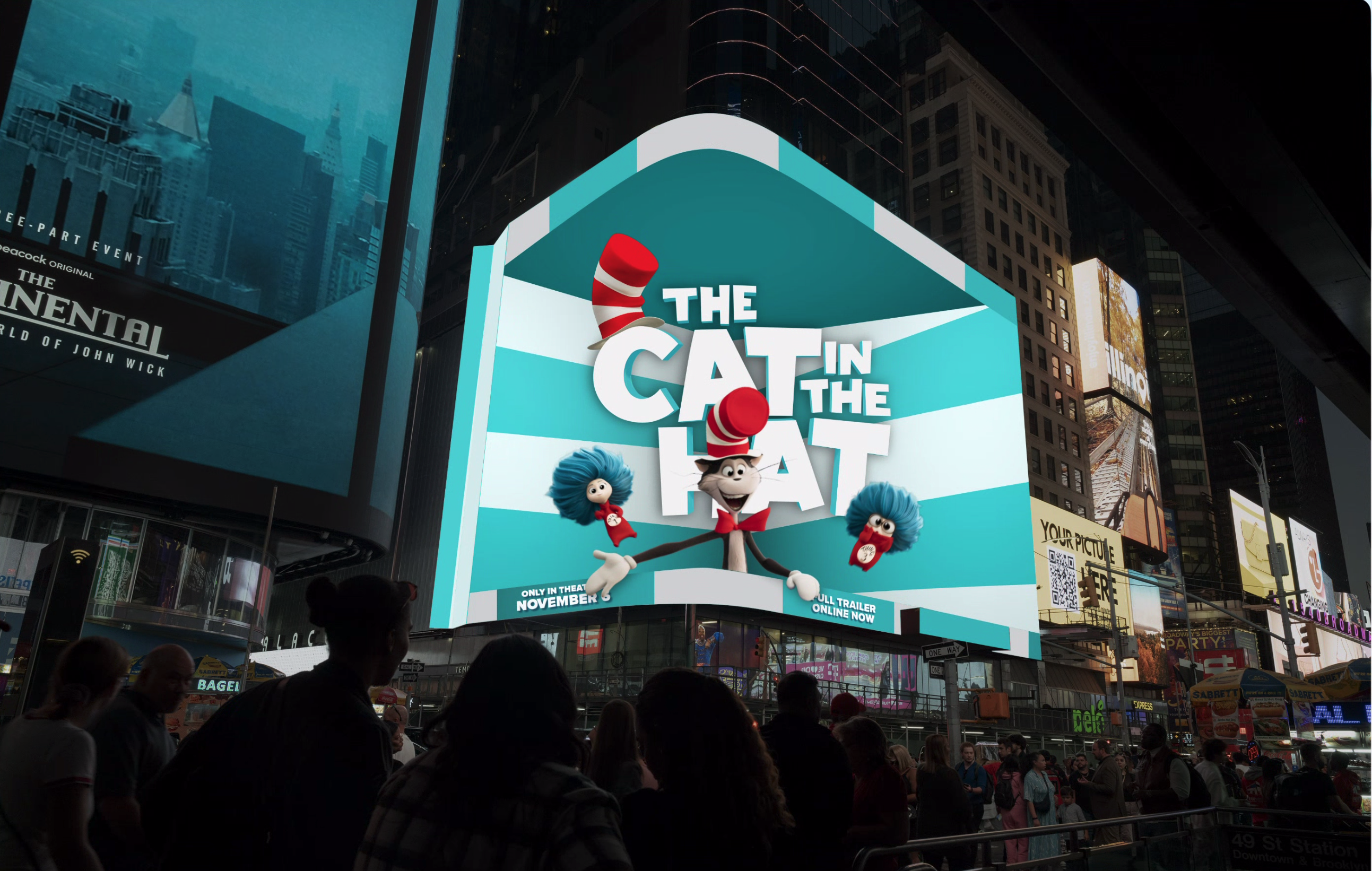
An early styleframe for client approval before moving into the full 3D build.
Process
The first step was calibrating a 3D camera in Cinema 4D against a reference photo of the actual building, matching lens, position, and perspective so that anything built in 3D would line up correctly with the real screen when viewed from the street. From there I built 3D geometry sized to the exact aspect ratio and specs of the physical display, and used that as a frame of reference — essentially a set of guides showing exactly where content would get cut off by the edges of the screen.
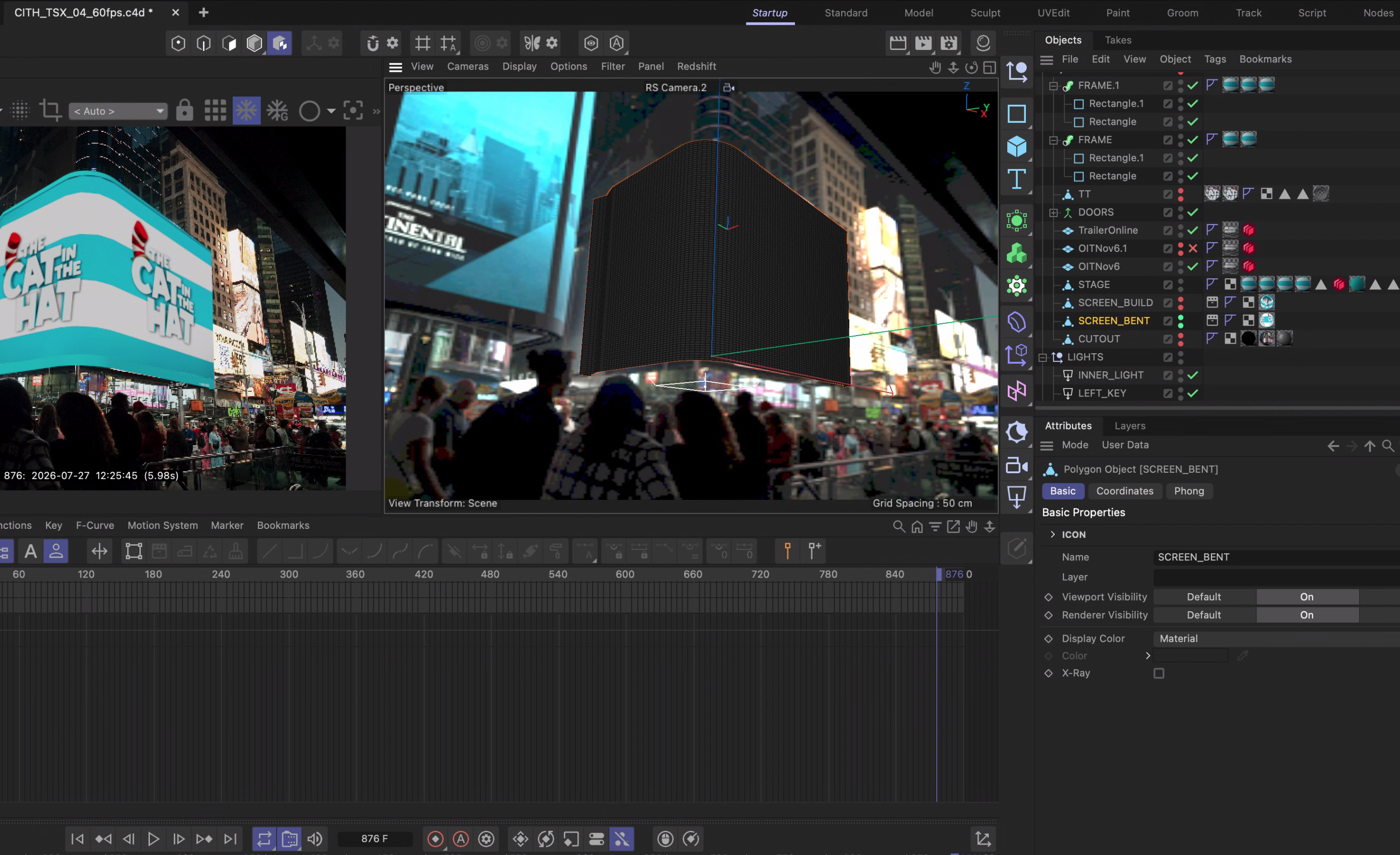
The 3D camera set up in Cinema 4D, matched against a reference photo of the building so the geometry would align with the physical screen from the correct viewing angle.
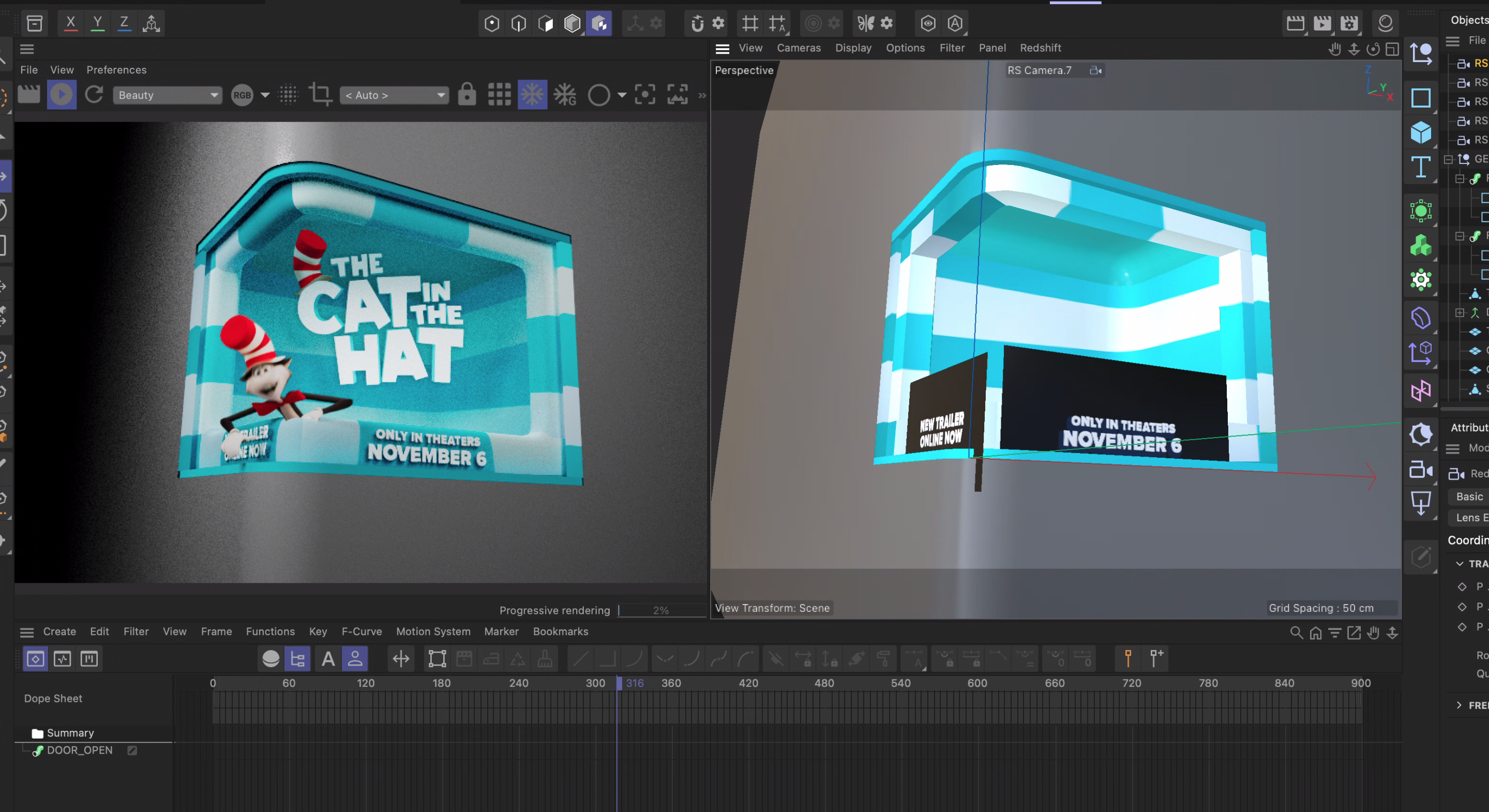
The stage environment built around the calibrated camera.
With that working area established, I built out the full 3D stage environment. I rendered an image sequence out of that scene and brought it into After Effects to fine-tune color, timing, and animation. I kept as many elements as possible editable at the After Effects stage specifically so client notes and internal changes could be made quickly without having to round trip between after effecrs and cinema 4D each time.
After Effects Demo
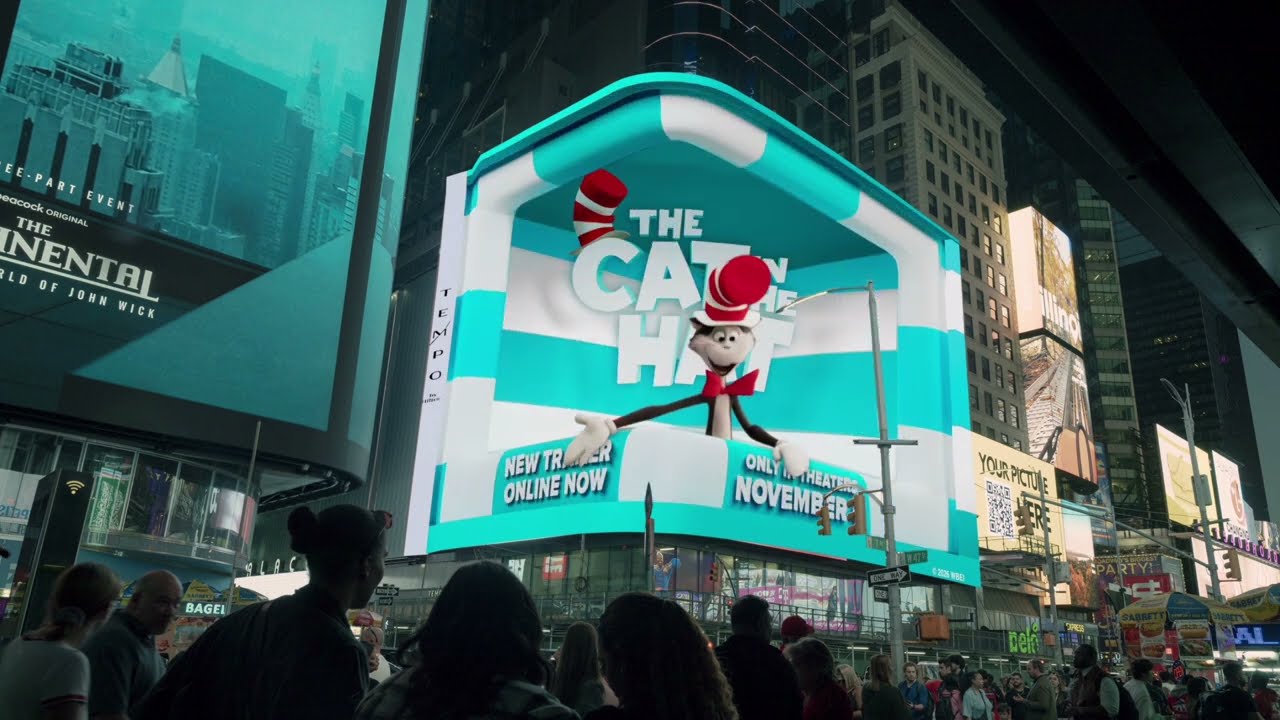
Once the demo version was approved, I rendered a new image sequence out of After Effects and brought it back into Cinema 4D, then projected it onto the screen geometry using camera mapping — effectively UV-mapping the flat, finished image onto the 3D surface the same way the physical screen itself would display it. With the texture baked onto the geometry, I exported the final output and sent it to the client to route to the screen vendor.
The finished piece, timed and color corrected for how it reads on the physical display in Times Square.
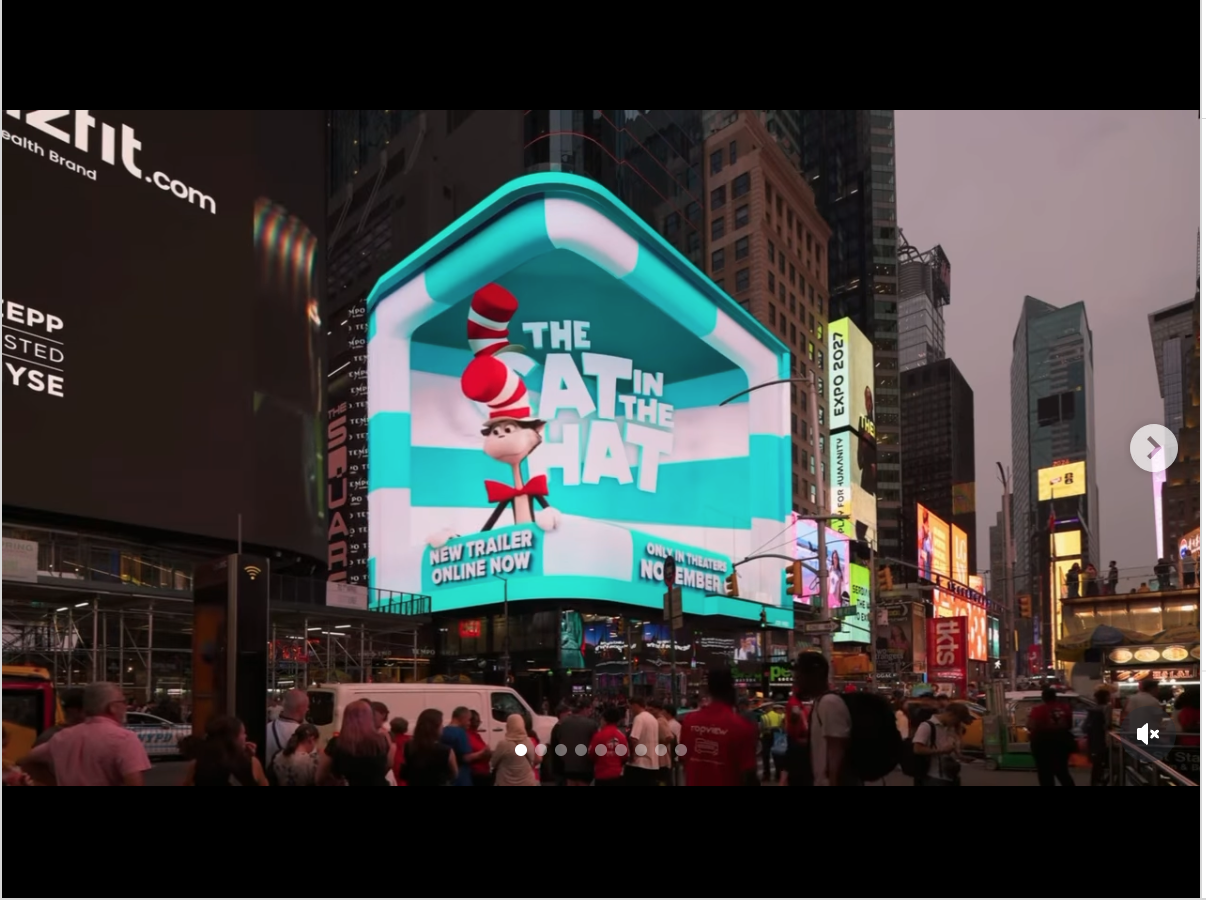
Outcome
The final piece played on the TSX screen in Times Square, on one of the most visible corners in the city. I really enjoyed havving a chance to fully reverse-engineer an anamorphic pipeline I'd wanted to understand for years — camera calibration, 3D staging, and camera-mapped re-projection all working together to make a flat screen read as real depth from the sidewalk.